Bratislava, October 26, 2026
The Slovak Battery Alliance actively contributed to discussions on the future of battery energy storage and flexibility in Slovakia. At the 20th anniversary edition of the ENERGOFORUM 2026 conference, experts compared Slovak and Czech experiences and discussed opportunities for the further development of energy storage. One of the key topics was the need to establish appropriate regulatory and market conditions to enable the wider deployment of battery energy storage systems (BESS).
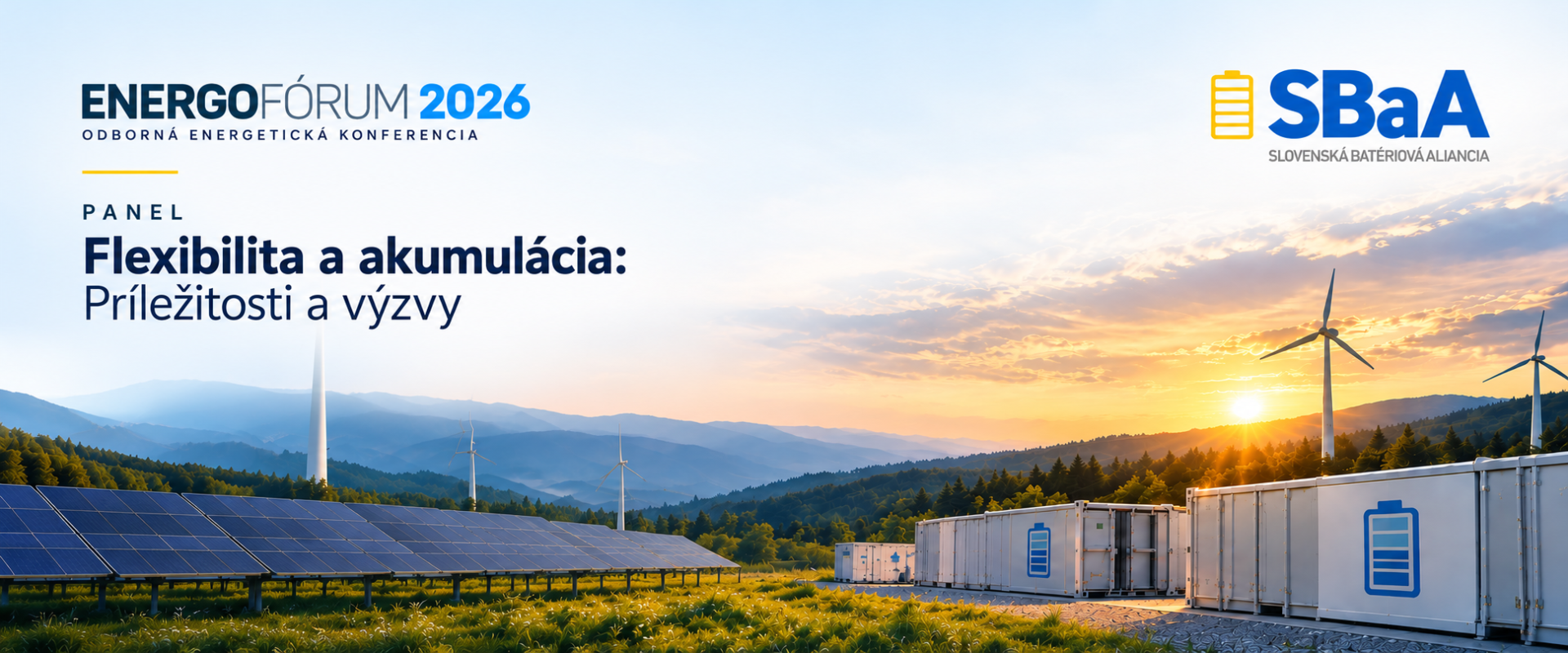
The ENERGOFORUM 2026 conference, held on 22–23 October 2026 at Hotel Partizán in Tale, in the Low Tatras, featured the Slovak Battery Alliance (SBaA) in its closing panel discussion entitled “Flexibility and Energy Storage: Opportunities and Challenges.”
The discussion was moderated by Marian Smik from the Slovak Battery Alliance. The panel featured Jan Fousek (Czech Association for Energy Storage AKU-BAT CZ), Michal Chudy (PowereX Energy), Miroslav Kret (SEPS – Slovak Electricity Transmission System), Roman Pavlik (MTS – Modern Technology Systems, an SBaA member company), and Tomas Simovic (Slovenske elektrarne).
The panel focused on one of the fastest-growing areas of the energy sector – electricity storage and power system flexibility. Experts compared the experiences of Slovakia and the Czech Republic in operating battery energy storage systems, discussed the development of flexibility aggregation, and assessed changes in the commercial and operational models for battery storage over the past year.
The discussion highlighted the growing importance of battery energy storage systems (BESS) in ensuring power system stability and flexibility. Battery storage systems can respond rapidly to changes in electricity generation and consumption, help balance supply and demand, and enable more efficient integration of renewable energy sources.
Particular attention was paid to the differences between the Slovak and Czech markets. Experience from the Czech Republic demonstrates the importance of a well-designed regulatory framework that supports investment in energy storage and enables its broader participation in the energy market.
To support the further development of battery energy storage systems in Slovakia, it is essential to address the structure of reserved capacity charges for BESS and enable their broader participation in the provision of ancillary services, including Frequency Restoration Reserve (FRR) services.
Removing these barriers could encourage new investment in battery energy storage, increase power system flexibility, and contribute to a more efficient functioning of the Slovak electricity market.
Battery energy storage systems already play an important role in providing power system flexibility. However, their further development will depend not only on technological progress but, above all, on the establishment of appropriate regulatory and market conditions.
The Slovak Battery Alliance has consistently emphasised the need for a transparent and predictable regulatory environment to support the development of battery technologies in Slovakia.